

Here’s what nobody tells you when you’re planning a wedding: the marriage isn’t held together by the promises you make on that day. It’s held together by the promises you remake on ordinary Tuesdays when you’re tired, frustrated, and wondering if you married the right person.
We’ve been sold a story about love that ends at “happily ever after.” But the couples who actually make it—who stay married not just legally but emotionally—they know something different. They know that lasting love isn’t about never breaking. It’s about learning how to fix what breaks.
And if you don’t believe me, look at the marriages that have survived decades in the public eye, where every crack is photographed and every rumor is front-page news.
What We Get Wrong About Long-Lasting Marriages
When we see couples who’ve been together for 20, 30, 40 years, we assume they got lucky. We think they must have found their “perfect match” or that they’re just naturally compatible.
That’s not how it works.
Long-lasting marriages survive because two people develop a specific skill set that has nothing to do with romance and everything to do with repair. They learn how to acknowledge damage, take responsibility for their part in creating it, and then—this is the hard part—actually change their behavior.
It’s not sexy. It’s not what gets written into love songs. But it’s real.
Think of it like this: romance is the spark that starts the fire. Repair is the skill of keeping that fire going when the wind picks up, when the wood gets damp, when you’re both too tired to tend it. Romance makes you want to get married. Repair makes you stay married.
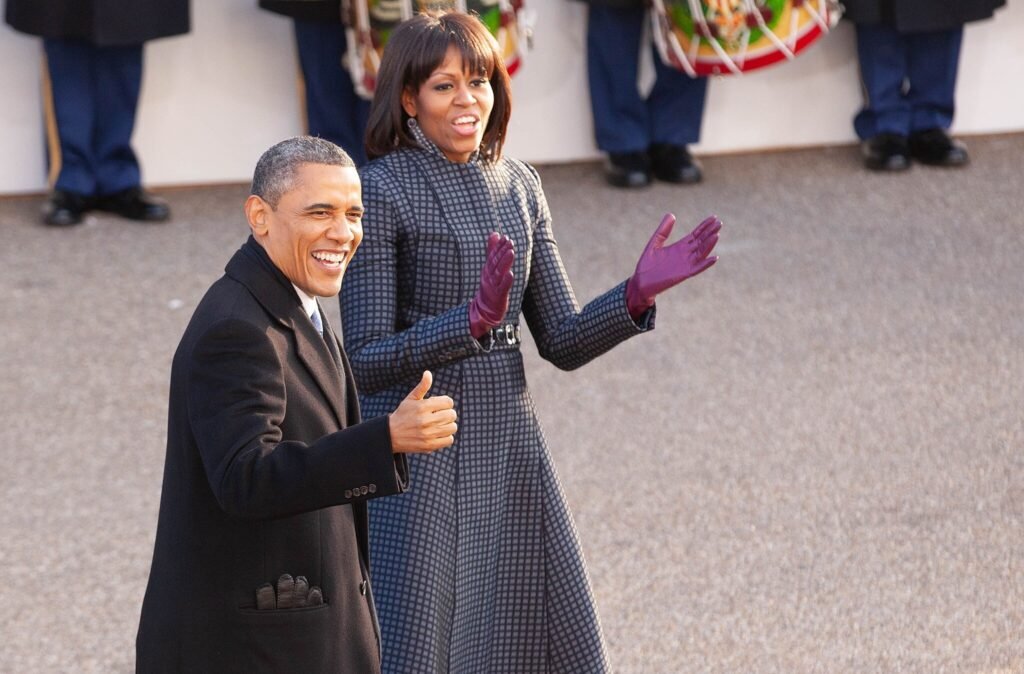
Barack and Michelle Obama: When the Life You Planned Isn’t the Life You’re Living
Who they are: The former First Couple, together since 1992, married for over 30 years. She’s a lawyer-turned-author-turned-icon. He became the President of the United States. They’ve raised two daughters under the harshest spotlight imaginable.
The challenge: In her memoir Becoming, Michelle Obama wrote something that shocked a lot of people. She said there was a ten-year period when she couldn’t stand her husband. Ten years. Not a rough patch—a decade.
Why? Because the life they were building didn’t match the partnership she’d signed up for. Barack was away constantly, chasing political ambitions. She was home, managing two young daughters, her own abandoned career, and a growing resentment that she’d become a supporting character in someone else’s story.
How repair showed up: They went to marriage counseling. Michelle was furious that Barack didn’t think he needed to go—that somehow she was the one who needed fixing. But here’s what changed everything: she stopped waiting for him to make her happy.
She renegotiated her role. She built her own life, pursued her own goals, and stopped expecting Barack to be present in ways his life simply didn’t allow. And Barack? He had to accept that the woman he married wasn’t going to shrink herself to fit his ambitions. He had to make space for her evolution, even when it was inconvenient.
The moment of vulnerability: Michelle has been refreshingly honest about this. She’s said publicly that marriage is hard, that there were years when she looked at Barack and thought about throwing him out a window. She normalized the idea that you can deeply love someone and also, occasionally, deeply dislike them.
The lesson: Long-lasting marriages survive because both people are willing to renegotiate roles as life changes. You don’t marry someone once. You marry them again and again—when you have kids, when careers shift, when parents age, when bodies change. Each phase requires a new agreement.
What this shows us: You’re allowed to outgrow the version of your marriage that isn’t working anymore. That’s not failure—that’s evolution. The question isn’t whether your partnership will need to change. It’s whether both of you are willing to change with it.
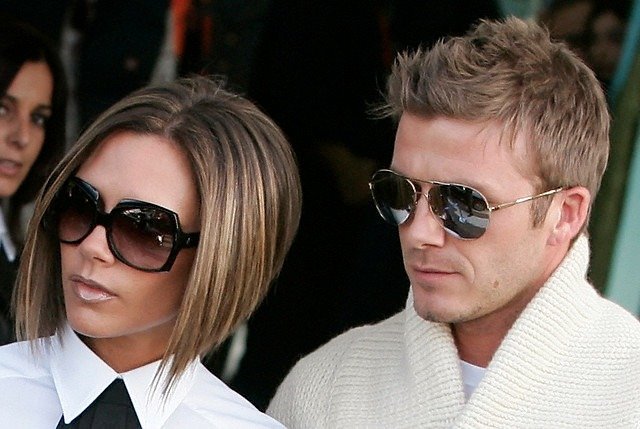
David and Victoria Beckham: What You Protect Matters More Than What You Share
Who they are: British football royalty meets Spice Girl turned fashion mogul. Married since 1999, four kids, constantly photographed, perpetually rumors-swirled. They’ve been the subject of breakup speculation for literally decades.
The challenge: In 2023, David admitted in his Netflix documentary that their marriage had gone through “extremely difficult” periods. He didn’t specify what happened, but tabloids have had a field day for years with allegations and gossip. What we do know is this: they weathered storms that would have ended most celebrity marriages.
How repair showed up: Victoria has said they made a conscious decision early on about what they would protect. Not everything needed to be explained, defended, or shared with the world. Some battles would be fought privately. Some repairs would happen behind closed doors.
David talked about how they learned to be a team against outside pressure rather than turning on each other when things got hard. When rumors swirled, instead of retreating into separate corners, they moved closer together. They created a boundary around their family that was non-negotiable.
The moment of vulnerability: David broke down crying in his documentary when talking about the pressure on his family and marriage. Here’s a man who’s spent his career being physically tough, emotionally composed, and professionally unshakeable—and he wept talking about protecting his marriage. That’s not weakness. That’s knowing what matters.
The lesson: Longevity often depends on what a couple protects from the outside world. Not every fight needs witnesses. Not every struggle needs to be posted. Not every opinion from family, friends, or the internet gets a vote in your marriage.
What this shows us: Your marriage doesn’t need to be transparent to everyone to be authentic. You get to decide what’s private, what’s sacred, and where the boundaries are. The world will always have opinions. Your job is to build a partnership strong enough that outside noise doesn’t drown out your actual connection.
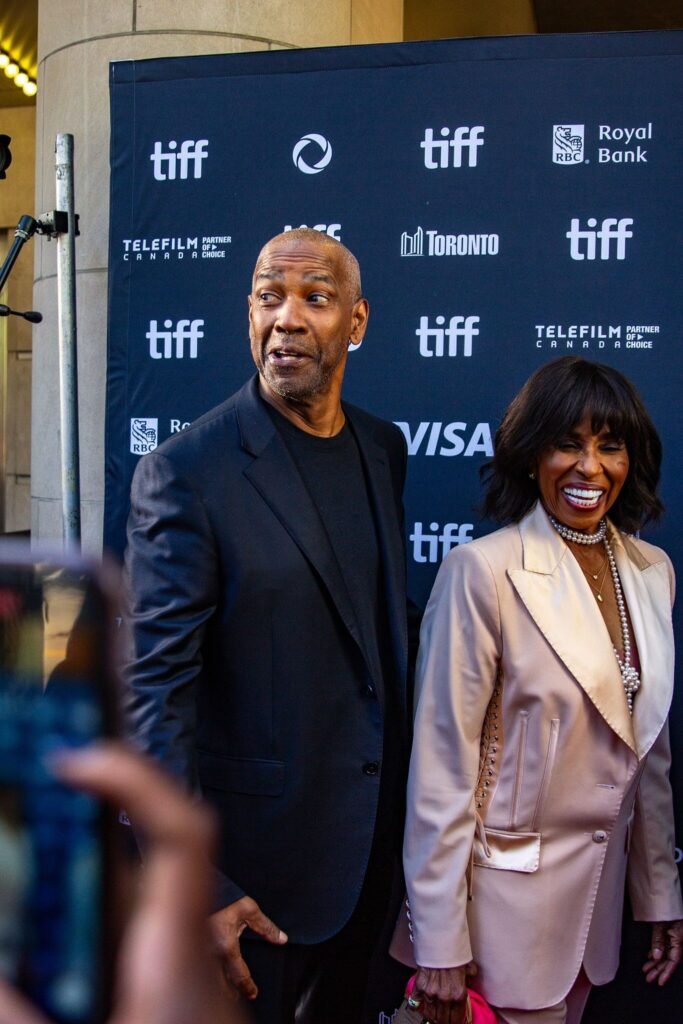
Denzel and Pauletta Washington: Choosing Your Marriage When You Could Choose Anything Else
Who they are: Married since 1983—over 40 years. Denzel is Hollywood royalty, one of the most respected actors alive. Pauletta is an accomplished singer and actress. They’ve raised four children who’ve largely stayed out of tabloid drama. In an industry where marriages implode spectacularly, they’re the rare success story.
The challenge: Denzel has been remarkably candid about this: their marriage almost didn’t make it. He’s admitted to periods of selfish behavior, and acknowledged that fame made him a difficult partner. He’s said that at various points, staying married would have been the harder choice than leaving.
How repair showed up: Here’s what Denzel has said: his wife showed him grace he didn’t deserve. And that grace gave him room to become a better man. But grace wasn’t passive—it was an active choice Pauletta made, probably multiple times, to see who he could become rather than just who he was being.
And Denzel had to choose her too. In a world where he could have had affairs, where he had access to anything and anyone, where he could have walked away with minimal consequences—he chose to stay. He chose to work on himself. He chose the harder path of accountability.
The moment of vulnerability: In interviews, Denzel doesn’t play the perfect husband. He credits Pauletta with their longevity. He’s honest that she’s put up with things that required real sacrifice on her part. He doesn’t romanticize it—he respects it.
The lesson: Longevity isn’t accidental—it’s the result of choosing the relationship even when it’s difficult. Even when leaving would be easier. Even when you’ve earned the right to be angry or disappointed. Even when you’re tired of trying.
What this shows us: Commitment isn’t a feeling—it’s a series of decisions. You choose your marriage in the morning when you’re irritated. You choose it when they’ve hurt you. You choose it when you’ve hurt them. You choose it when it’s boring, when it’s hard, when it’s thankless. That’s what builds a foundation that lasts.
Samuel L. Jackson and LaTanya Richardson: The Art of Breaking and Rebuilding
Who they are: Married since 1980—over 40 years. He’s one of the highest-grossing actors in film history. She’s a Tony-nominated actress and producer. They met in college and have been together through his rise to fame, his battle with addiction, and everything that comes with a high-profile life.
The challenge: Samuel has been open about his crack cocaine addiction in the late ’80s and early ’90s. It nearly destroyed him and, by extension, nearly destroyed their marriage. LaTanya found him passed out surrounded by drug paraphernalia. She gave him an ultimatum: get help or lose everything.
How repair showed up: He went to rehab. But here’s the thing about addiction and marriage—rehab is just the beginning. The real work was rebuilding trust. It was Samuel showing up differently, consistently, for years. It was LaTanya learning how to live with someone she now saw through a completely different lens. It was both of them accepting that their marriage had broken and deciding to build something new from the pieces.
LaTanya has said they went to counseling, that they learned how to communicate differently, that they had to renegotiate nearly everything about their partnership. The marriage that emerged wasn’t a continuation of what existed before—it was a reconstruction.
The moment of vulnerability: Samuel credits his wife with saving his life. But more than that, he’s been honest about the fact that he had to earn his way back into his own marriage. There was no entitlement, no assumption of forgiveness. Just work.
The lesson: Some marriages last not because they avoided breaking—but because they learned how to rebuild. There’s no shame in a relationship that’s been shattered and then carefully, deliberately put back together. Sometimes the rebuilt version is actually stronger.
What this shows us: Your marriage can survive terrible things if both people are willing to do terrible amounts of work. Betrayal doesn’t have to be the end. Addiction doesn’t have to be the end. But repair requires both people showing up with humility, honesty, and a willingness to become different versions of themselves.

The Common Thread: Repair Is a Skill, Not a Feeling
Here’s what all these couples have in common: they stopped expecting love to feel good all the time. They accepted that marriage includes seasons of disconnection, hurt, disappointment, and frustration. And they developed the skill of repair.
What repair actually looks like:
- Acknowledgment – Saying “I see that I hurt you” without immediately defending yourself
- Responsibility – Owning your part in the problem, even if it’s only 20% your fault
- Changed behavior – Not just apologizing but actually doing things differently
- Vulnerability – Being willing to admit when you’re wrong, scared, or lost
- Recommitment – Actively choosing your partner again, especially when it’s hard
This isn’t romantic. It doesn’t make for great Instagram captions or wedding vows. But it’s what keeps people married for 30, 40, 50 years.
Why This Matters for Your Relationship
You’re not Barack Obama or David Beckham. Your marriage probably won’t be dissected in tabloids or Netflix documentaries. But the principles are exactly the same.
Your marriage will break sometimes. You’ll hurt each other. You’ll disappoint each other. You’ll go through phases where you’re more roommates than lovers, more opponents than teammates.
That’s not a sign you married the wrong person. That’s just marriage.
The question is: do you know how to repair? Can you acknowledge damage without getting defensive? Can you take responsibility for your behavior even when you feel justified? Can you change, not just promise to change?
Because lasting love isn’t about finding someone you never fight with. It’s about finding someone you know how to fight with—and more importantly, someone you know how to fix things with afterward.
The Bottom Line
Romance gets you to the altar. Repair keeps you married.
The couples who make it aren’t the ones who never struggle. They’re the ones who struggle and then figure out how to find each other again. They’re the ones who are willing to renegotiate, rebuild, and recommit. They’re the ones who understand that marriage isn’t a feeling—it’s a practice.
So stop waiting for love to feel easy. Stop thinking something’s wrong because your marriage requires work. And start developing the skills that actually matter: communication, accountability, flexibility, and repair.
Your relationship doesn’t need to be perfect. It just needs two people who refuse to give up on fixing what breaks.
What’s one area of your relationship that needs repair right now? How will you start that conversation today? Share your thoughts in the comments below—we’d love to hear your story.