
Nobody hands you a manual. One minute you’re cutting up grapes into tiny pieces so your toddler doesn’t choke, and the next you’re texting your 17-year-old to ask if they made it home okay — and they reply four hours later with a single yeah. Parenting is wild like that.
If you’ve ever felt a bit lost about what your role actually is as your kids get older, you’re not alone. The truth is, parenting doesn’t stay the same — it evolves. And one of the most helpful things you can do for yourself (and your kids) is understand how it shifts.
So let’s talk about the 4 roles a parent plays as their kids get older — and how recognising where you are right now can genuinely transform the way you parent.

First, Why Does the Parenting Role Change At All?
Here’s a thought: your job as a parent has always had the same goal — to raise a person who can eventually function well in the world without you. But how you do that looks completely different when your child is four versus fourteen versus twenty-four.
When they’re little, they literally cannot survive without you. You are everything. But as they grow, the healthy goal is actually for them to need you less. Which is brilliant and also, let’s be honest, a little bit heartbreaking.
Understanding the natural progression of parenting roles helps you avoid two common traps: holding on too tight for too long, or stepping back too soon before your child is ready.
The 4 Roles a Parent Plays As Their Kids Get Older
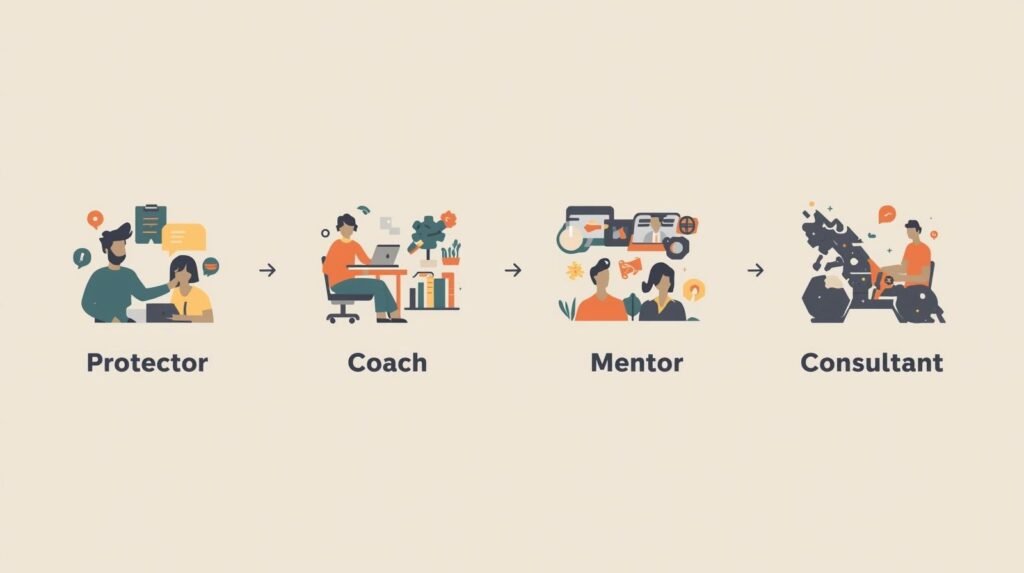
Role 1: The Protector (Ages 0–7 ish)
This is the role most of us instinctively understand. When children are small, they need someone to keep them safe, fed, warm, and emotionally secure. You are the whole world. You make every decision for them. You are boss, chef, nurse, teacher, and soft place to land — all rolled into one exhausted human.
In this phase, your child’s brain is literally developing around your presence and responsiveness. Research in developmental psychology consistently shows that secure attachment in early childhood — where children feel protected and emotionally seen — lays the foundation for everything else. Confidence, relationships, emotional regulation. It all starts here.
What it looks like: Setting boundaries, managing their environment, choosing their food, their clothes, their friends. Being the authority. Saying no a lot. Being physically present.
When it starts to shift: Around age 6–8, kids start forming their own opinions with more force. They start pushing back. That’s not a problem — that’s development. It’s your cue to start transitioning.
- Key parenting style here: Nurturing and protective — this is where authoritative parenting (firm but warm) really shines
- Common mistake: Staying in full protector mode too long — this is where helicopter parenting starts
Role 2: The Coach (Ages 7–12 ish)
As your child grows into the primary school years, something shifts. They start going out into the world — school, friendships, sports, hobbies — and your job changes from keeping them safe to helping them develop skills and confidence.
This is the coaching phase, and it’s actually a lovely one if you lean into it. You’re not making all the decisions anymore. You’re asking questions, guiding problem-solving, letting them try things and sometimes fail.
“What do you think you should do?” becomes one of the most powerful phrases in your parenting toolkit.
In this phase, you start stepping back from outcomes and focusing more on process. Did they try their best? Did they handle that situation with integrity? Did they ask for help when they needed it? That’s more important than whether they won the match or got top marks.
- Key skill to develop: Listening more than talking. Coaching is about drawing things out, not pouring things in
- What to let go of: The need to fix everything immediately. Let them sit with small discomforts and work through them
- Common mistake: Jumping straight back into protector mode the second things get hard
This phase also overlaps heavily with the research around authoritative parenting — the style consistently found to produce the most emotionally well-adjusted kids. It’s warm, engaged, and involves high expectations alongside genuine support. Not permissive. Not authoritarian. Right down the middle.
A Quick Comparison: Parenting Roles vs Common Styles
| Parenting Role | Age Range | Your Focus | Style That Works Best |
| Protector | 0–7 | Safety, security, attachment | Authoritative / Nurturing |
| Coach | 7–12 | Skills, resilience, problem-solving | Authoritative / Supportive |
| Mentor | 12–18 | Identity, values, independence | Gentle, open-dialogue |
| Consultant | 18+ | Guidance when asked, respect autonomy | Respectful / Hands-off |
Role 3: The Mentor (Ages 12–18 ish)

Ah. The teenage years. Everyone warned you about these, didn’t they?
Here’s the thing about parenting teens — it genuinely requires the biggest mindset shift of all. Because your teenager doesn’t want a boss anymore. They don’t even particularly want a coach. What they need — even when they’re acting like they need nothing from you at all — is a mentor.
A mentor is someone who shares wisdom without forcing it, who holds space for questions without demanding answers, who stays connected even when the other person pulls away. Sound familiar? This is the role of parents in adolescence, and it is genuinely hard.
This phase is all about the long game. Your teenager is forming their identity. They’re testing values, experimenting with who they are, deciding what they believe. Some of that will look chaotic and some of it might scare you. But your job isn’t to control the outcome — it’s to stay present and maintain the relationship.
Because here’s the research-backed truth: teenagers who feel close to their parents — who feel heard and not judged — are more likely to come to those parents when things go wrong. The goal isn’t obedience. It’s connection.
- What shifts: From directing to listening. From rules to conversations about values
- What stays the same: Boundaries still matter. Teenagers actually want structure — they just won’t admit it
- Most powerful tool: The car. Seriously. Side-by-side conversations (no eye contact pressure) are where teens open up
Gentle parenting approaches — which emphasise emotional validation, empathy, and collaborative problem-solving — tend to work well here. Not because you let them do whatever they want, but because you treat them with the respect of someone who’s almost an adult, while still being their parent.
Role 4: The Consultant (Ages 18+)
This is the one nobody talks about enough, and honestly? It might be the trickiest of all.
When your child becomes an adult, the dynamic changes completely. They are legally, socially, financially (or working towards it) their own person. You are no longer in charge. You are no longer the default decision-maker. And if you try to stay the boss, you will damage the relationship.
The consultant role means exactly what it says: you offer your expertise, experience, and perspective when it’s asked for — and you back off when it isn’t.
This is where a lot of parents struggle, especially if parenting has been a huge part of their identity. Watching your adult child make a choice you’d do differently is genuinely difficult. But the consultant doesn’t overrule the client. They advise.
- What this looks like: Waiting to be asked. Sharing your view once, not ten times. Supporting their choices even when you disagree
- What to avoid: Unsolicited advice, guilt trips, or making them feel judged for their decisions
- How to stay close: Show genuine interest in their life. Ask questions. Be someone they actually want to talk to
The parents who do this well tend to end up with adult children who actually call them. Who visit voluntarily. Who bring their partners home for Sunday dinners and genuinely want to be there.
So When Do You and Your Child Actually Become Friends?
This is the question that doesn’t get asked enough — probably because the answer feels a bit complicated. Can you be friends with your child? Should you be? And if so, when does that actually happen?
Let’s be clear about one thing first: trying to be your child’s best friend when they’re young is a trap. Children need a parent, not a peer. The friendship dynamic — where there’s no clear authority, where boundaries are negotiable, where you’re both just figuring things out together — doesn’t work when one of you is 8 and the other is 35. It creates anxiety in kids, not connection.
But something beautiful starts to shift in the late consultant phase — roughly when your child is in their mid-to-late twenties and beyond, though it can happen earlier for some families. The power dynamic quietly dissolves. The gap between you closes. And if you’ve navigated the earlier roles well, what emerges looks a lot like genuine friendship.
“The goal was never to stay their parent forever in the traditional sense. The goal was to raise a person you’d genuinely like — and who genuinely likes you back.”
What the friendship stage actually looks like
You’ll know it’s arrived not with a dramatic announcement, but in small, ordinary moments:
- They call you to share good news — not just when something’s gone wrong
- They ask your opinion — genuinely, not because they have to
- You disagree and it’s fine — no one sulks, no one feels judged
- You make plans together because you actually enjoy each other’s company
- They tell you things they don’t tell everyone else — about their relationship, their worries, their hopes
This is the payoff. And it doesn’t happen by accident. It happens because you put the work in during every earlier phase — you protected them when they needed it, coached them through the messy middle years, mentored them through adolescence without suffocating them, and respected their autonomy as adults.
What age does this usually happen?
There’s no fixed answer, but most parents who describe a genuinely adult friendship with their children say it really clicked somewhere between their child being 25 and 35. That’s often when the last traces of dependence — financial, emotional, practical — have been worked through, and two adults are simply standing in front of each other as equals.
Some families get there earlier. Some later. And some — if the earlier role transitions didn’t go smoothly — need intentional repair work first. But it is possible, and it’s worth everything to get there.
One important note: the friendship is real, but the parenthood doesn’t disappear. You’re still their mum. In a crisis, in a moment of real need, that role will resurface — and that’s okay. Good friendships can hold complexity. So can this one.
What Happens When You Don’t Realise the Role Is Supposed to Change?

Here’s the honest truth: most parenting problems aren’t about bad intentions. They’re about being stuck in the wrong role at the wrong time.
You love your child. Of course you do. But love doesn’t automatically update itself when the developmental stage changes. And when a parent keeps operating from an outdated role — however well-meaning they are — there are real consequences for the relationship and for the child.
When the Protector won’t become the Coach
This is the origin story of helicopter parenting. Your child is 10, 11, 12 — developmentally ready to solve problems, take small risks, and experience the natural consequences of their choices. But you’re still in full protector mode: managing their friendships, doing their homework with them, stepping in before they’ve even had a chance to try.
What it looks like from the outside: a capable child who seems oddly helpless. A kid who can’t make decisions without checking with you first. Who panics when things don’t go perfectly. Who hasn’t had enough practice at failing — so when they do, eventually, it hits them hard.
Research on overprotective parenting consistently links it to higher anxiety in children, lower confidence, and reduced resilience. The intention is love. The impact is limitation.
When the Coach won’t become the Mentor
This one tends to show up during the early teen years. Your child is 13, 14, 15 — desperately trying to form their own identity, pulling away from you in the way all healthy teenagers do — and you’re still in coach mode: correcting, advising, directing, problem-solving on their behalf.
The result? They stop talking to you. Not because they don’t care, but because every conversation feels like a performance review. They learn to filter what they share. They find their emotional support elsewhere — in friends, in the internet, anywhere that doesn’t come with unsolicited feedback.
Teenagers don’t need fewer opinions from you. They need to feel that you trust them enough to form their own.
The irony is that the more tightly you try to hold on in this phase, the more distance you create. The mentor who stays curious — who asks instead of tells, who listens without immediately fixing — keeps the door open. That open door is everything.
When the Mentor won’t become the Consultant
This is perhaps the most common — and the most quietly damaging — role mismatch. Your child is an adult. They’re 22, 28, 32. They have their own home, their own relationship, their own decisions to make. And yet you’re still mentoring: weighing in on their choices, commenting on how they’re managing their finances or their relationship or their career without being asked.
What happens in the relationship over time? They start to dread the calls. They share less. They feel like they can’t do anything right. They pull away — not dramatically, but gradually — and you’re left wondering why you feel so distant from a child you love so much.
Parenting adult children who feel controlled or criticised often leads to what family therapists call emotional cutoff — where adult children manage their anxiety about the relationship by simply reducing contact. It’s one of the more painful outcomes in family dynamics, and it’s almost always avoidable.
The ripple effect of staying stuck
When parents don’t shift roles in line with their child’s development, the effects go beyond just the parent-child relationship. Consider:
- On the child’s sense of self: Being over-managed can create adults who struggle to trust their own judgment — who constantly second-guess themselves or seek external validation
- On the child’s other relationships: Kids who’ve never had their autonomy respected often struggle with boundaries in friendships, romantic relationships, and workplaces
- On the parent: Staying stuck in an earlier role is exhausting. It also prevents your own next chapter — your identity outside of active parenting
- On the relationship itself: Every missed transition is a missed opportunity to evolve into something richer. The friendship stage doesn’t happen by default. It happens because both parties grew into it
The good news? Awareness is everything. You don’t have to have done it perfectly from the start. If you recognise yourself in any of this, it’s not too late to recalibrate. Role transitions can happen at any age. Conversations can be had. Relationships can shift. The fact that you’re even asking these questions puts you miles ahead.
Your Questions Answered
When should parents stop being the “boss” and start coaching?
Around age 7–8 is when most children are developmentally ready for more autonomy. You’ll notice it when they start pushing back harder on decisions or wanting to solve problems themselves. That resistance isn’t defiance — it’s your cue to shift gears.
How can parents balance guidance and independence for older kids?
The short answer: offer a framework, not a path. Instead of telling a teenager what to do, talk through the options with them. Help them think through consequences. Then let them decide within safe limits. This builds the decision-making muscle they’ll need as adults.
How do you parent adult children without controlling them?
Ask yourself before speaking: “Did they ask for my opinion?” If yes, share it warmly and once. If no, find a way to support them without inserting yourself into their choices. The goal is to stay someone they want in their lives, not someone they feel they have to manage.
What parenting style works best for older children and teenagers?
The evidence consistently points to authoritative parenting — warm, high-expectation, open communication — as producing the most positive outcomes across childhood and adolescence. As kids move into their late teens, elements of gentle parenting (emotional validation, collaboration) become increasingly important.
How can parents stay close to teens who want more independence?
Stay curious, not controlling. Find activities you genuinely enjoy together. Don’t take the eye-rolls personally — they’re developmentally normal and usually not about you. Keep showing up. Keep the door open. And if they shut it sometimes, don’t knock it down.
Can you really be friends with your adult child?
Yes — and it’s one of the most rewarding relationships you can have. But it’s earned, not assumed. It tends to develop most naturally when the earlier roles were handled well: when your child felt protected but not smothered, coached but not controlled, mentored but not managed. The friendship emerges when both of you feel like equals — usually in your child’s mid-to-late twenties, though every family is different.
So Where Are You Right Now?

The beautiful (and occasionally maddening) truth is that you’ll probably be in multiple roles at once if you have children at different ages. You might be in full protector mode with your four-year-old while simultaneously trying to master the mentor role with your fifteen-year-old.
That’s a lot. Give yourself some credit.
The key takeaway here isn’t that you need to be perfect at each phase — it’s that awareness helps. Knowing which role is needed right now means you’re less likely to get stuck in the wrong one. And knowing what’s at stake when you do get stuck? That’s the thing that makes you want to pay attention.
Parenting is not static. It’s not a fixed identity. It’s one of the most dynamic, evolving relationships you’ll ever have — and the parents who adapt tend to end up with the strongest connections to their kids, at every stage of life.
And if you get it right? You don’t just raise a child. You gain a friend.
Which role are you navigating right now? Drop a comment below — this stuff is easier when we talk about it honestly.