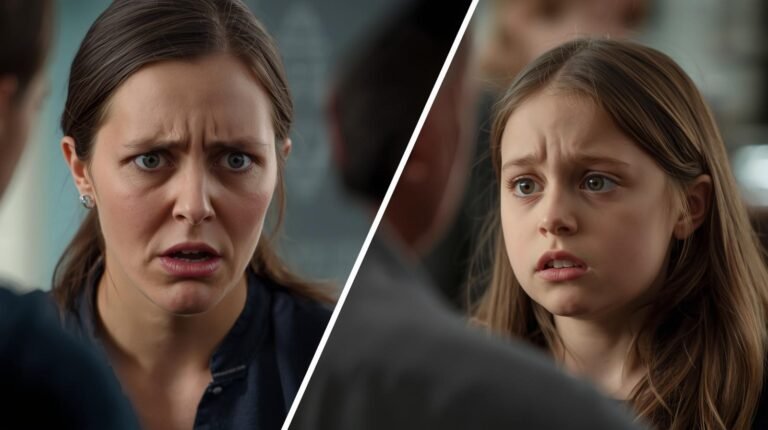
Here’s something nobody tells you when you’re young: failure doesn’t just knock once. It shows up uninvited, often at the worst possible time, and sometimes it brings friends. A marriage that falls apart. A job that evaporates. A dream that crumbles in your hands like old paper.
And yet, some people don’t just survive these moments—they transform them into launching pads.
I’m not talking about the Instagram version of “resilience” where everything’s wrapped in a neat bow with a motivational quote. I’m talking about the messy, unglamorous work of bouncing back from failure when you’re not sure you have anything left to bounce with. When getting out of bed feels like a victory. When starting over sounds less like an opportunity and more like a punishment.
The truth? You already know how to do this. You’ve done it before—maybe not on a global stage, but in your own life. And if you need proof that it’s possible, that the worst moments don’t have to be the final chapter, let me introduce you to four women who turned their rock bottom into solid ground.
What Does Bouncing Back From Failure Actually Mean?
Let’s get real for a second. Bouncing back from failure isn’t about pretending the bad thing never happened or slapping on a smile and moving forward like nothing hurts. That’s not resilience—that’s suppression, and trust me, that backfires eventually.
True resilience is about feeling the weight of what went wrong, acknowledging that it changed you, and then deciding that the story doesn’t end there. It’s about looking at the wreckage and asking, “Okay, what now?” instead of “Why me?”
It’s messy. It involves crying in your car, eating cereal for dinner three nights in a row, and having conversations with yourself that would probably sound unhinged to anyone listening. But it also involves something quietly powerful: the decision to keep going even when you don’t know where you’re going.
You don’t have to bounce back fast. You don’t have to bounce back gracefully. You just have to bounce.
Mary J. Blige: When Love Becomes the Lesson

Mary J. Blige didn’t just sing about pain—she lived it, breathed it, and eventually, used it as fuel. The Queen of Hip-Hop Soul built a career on raw emotion, but behind those powerhouse vocals was a woman navigating some seriously turbulent waters.
The Challenge: A Marriage That Cost Her Everything
In 2016, Mary filed for divorce from her husband and manager of 13 years, Kendu Isaacs. What should have been a private heartbreak became a public spectacle. It wasn’t just about love gone wrong—it was about betrayal, financial strain, and the realization that the person she’d trusted with her heart had also drained her bank accounts. Reports surfaced that Isaacs had been unfaithful and was demanding nearly $130,000 a month in spousal support.
She was gutted. Publicly humiliated. And financially devastated.
How She Bounced Back
Here’s where it gets interesting. Mary didn’t hide. She could have disappeared for a year, licked her wounds in private, and emerged with a carefully crafted comeback narrative. Instead, she went straight to work. She released the album Strength of a Woman, which dealt directly with her divorce, her pain, and her determination to rebuild.
In interviews, she was brutally honest. “I didn’t see it coming,” she admitted. “I was married to my manager, so there was a trust factor that was destroyed.” But she didn’t wallow—she transformed. She credited therapy, her faith, and the realization that she had survived worse before.
The woman who once sang “Not Gon’ Cry” found herself in a situation where crying was inevitable. But she also found her strength.
What This Shows Us
You don’t have to have it all figured out to move forward. Mary didn’t wait until she was “healed” to get back to work—she used the work itself as part of her healing. Bouncing back from failure doesn’t mean you’ve stopped hurting; it means you’re not letting the hurt have the final word.
When your world falls apart, you’re allowed to be a mess. But you’re also allowed to create something meaningful from that mess. Your pain doesn’t disqualify you from success—sometimes, it’s the very thing that propels you toward it.
Halle Berry: Breaking the Pattern

Halle Berry has an Oscar, a legendary career, and a face that’s graced countless magazine covers. From the outside, she looks like someone who has it all together. But peel back the layers, and you’ll find a woman who’s had her heart broken more times than she probably cares to count.
The Challenge: Failed Marriages and Public Scrutiny
Halle’s first marriage to baseball player David Justice ended in 1997, and it left her in a dark place—so dark she’s spoken about contemplating suicide. Her second marriage to singer Eric Benét crumbled amid his infidelity. Her third, to actor Olivier Martinez, lasted only three years before they called it quits.
Each time, the world watched. Each time, the tabloids had something to say. And each time, the question lingered: What’s wrong with Halle Berry?
How Resilience Showed Up
Here’s what’s remarkable: Halle refused to let failed relationships define her worth. After her third divorce, she didn’t spiral. She reflected. She went to therapy. She took ownership of her patterns without blaming herself for other people’s choices.
In a 2021 interview, she said something that stuck with me: “I realized I’ve been picking the same person over and over again. Just in different packaging.” That’s the kind of self-awareness that changes everything. She didn’t just move on—she evolved.
What This Shows Us
Bouncing back from failure sometimes means recognizing the patterns we keep repeating. It’s easy to blame bad luck or bad timing, but the harder, more transformative work is asking: What role am I playing in this? What lesson keeps showing up because I haven’t learned it yet?
Halle’s story reminds us that resilience isn’t just about getting back up—it’s about getting back up differently. It’s about breaking cycles, even when that means sitting with uncomfortable truths about ourselves.
You’re not broken because you’ve had multiple failures. You’re human. And every failure is a chance to choose a different path forward.
Oprah Winfrey: The Firing That Changed Everything

Before Oprah was Oprah—before the empire, the magazine, the book club, the billions—she was a 22-year-old news anchor who got fired.
The Challenge: Losing Her First Big Break
In 1977, Oprah was working as a co-anchor for the six o’clock news on WJZ-TV in Baltimore. She was young, ambitious, and determined to make it in television. Then, her bosses pulled her off the air. They told her she was “too emotional” for the news. She was demoted to morning TV, which at the time felt like a career death sentence.
She was devastated. This was supposed to be her moment, and instead, she felt like a failure.
How She Turned It Around
Oprah has said that getting fired was “the best thing that ever happened” to her, but let’s be clear—it didn’t feel that way at the time. She cried. She doubted herself. But then something shifted. Morning TV, with its lighter format and human-interest stories, allowed her to connect with people in a way the rigid structure of news never could.
Her empathy—the very trait that got her fired—became her superpower. She wasn’t trying to be objective and detached; she was warm, curious, and genuinely interested in people’s stories. That authenticity became the foundation of everything that followed.
What This Shows Us
Sometimes the thing that feels like a failure is actually a redirection. Oprah wasn’t wrong for the news—the news was wrong for her. But she had to fail at one thing to discover what she was truly meant to do.
Bouncing back from failure often requires trusting that even when things don’t go according to plan, there’s another plan unfolding. The rejection that feels crushing today might be the push you need toward something better.
When you lose something you thought you needed, pay attention to the doors that open. The answer isn’t always to fight your way back to where you were—sometimes, it’s to move forward into something new.
J.K. Rowling: Writing From Rock Bottom

Before Harry Potter became a global phenomenon, J.K. Rowling was a single mother on welfare, struggling with depression and feeling like a complete failure.
The Challenge: Broke, Depressed, and Alone
In the early 1990s, Rowling’s life looked nothing like a fairy tale. Her marriage had fallen apart. She was living in a cramped apartment in Edinburgh with her infant daughter, surviving on government assistance. She’s described herself during that time as “the biggest failure I knew.”
She was clinically depressed. She had no money. Her self-worth was in the gutter. And yet, she had this story in her head about a boy wizard that wouldn’t leave her alone.
How She Rebuilt
Rowling has said that hitting rock bottom gave her a “solid foundation” to build on. With nothing left to lose, she poured everything into finishing her manuscript. She wrote in cafés while her daughter napped, scribbling on napkins and scraps of paper when she couldn’t afford much else.
Twelve publishers rejected Harry Potter and the Philosopher’s Stone. Twelve. But she kept going. When Bloomsbury finally took a chance on her, they printed just 1,000 copies—and advised her to get a day job because she’d never make money writing children’s books.
We all know how that turned out.
What This Shows Us
Rock bottom isn’t the end—it’s a place to rebuild from. Rowling didn’t wait until her life was perfect to pursue her dream. She wrote from the struggle, through the depression, despite the rejections.
Bouncing back from failure doesn’t require perfect circumstances. It requires showing up, even in small ways, even when you don’t believe it’ll work out. It requires finishing the thing, submitting the application, taking the next step, even when success feels impossible.
Your worst moment doesn’t define your future—unless you let it. The story you’re living right now isn’t over. You’re still writing it.
What All of This Means for You
| Celebrity | The Failure | The Bounce Back | The Lesson |
| Mary J. Blige | Devastating divorce, financial betrayal | Used pain as creative fuel, committed to therapy | You don’t need to be healed to move forward |
| Halle Berry | Multiple failed marriages | Broke patterns through self-awareness | Resilience means changing how you show up |
| Oprah Winfrey | Fired from her first TV job | Embraced what made her “different” | Rejection can be redirection |
| J.K. Rowling | Single mother on welfare, depressed | Wrote through the struggle despite rejections | Rock bottom can be your foundation |
The Unglamorous Truth About Bouncing Back From Failure
Let’s talk about what these stories don’t show. They don’t show the nights Mary cried herself to sleep. The therapy sessions Halle sat through, unpacking painful truths. The moments Oprah doubted whether she’d ever make it. The days Rowling wondered if anyone would ever care about her wizard story.
Bouncing back from failure isn’t a montage set to inspiring music. It’s slow. It’s repetitive. It’s boring, sometimes. It’s showing up for yourself on days when you don’t feel like it. It’s choosing hope when hope feels naive.
But here’s the thing: you don’t need to be extraordinary to do this. You just need to be willing.
Willing to feel the pain without letting it consume you. Willing to try again, even after you’ve been knocked down. Willing to believe that your story isn’t finished yet, even when the current chapter feels like trash.
Your Next Chapter Starts Now
So, where do you go from here?
First, give yourself permission to be exactly where you are. If you’re in the middle of a failure right now—if your marriage fell apart, your job disappeared, your dream didn’t pan out—you’re allowed to feel terrible about it. Sit with that. Cry if you need to. Break down if you must.
But then, when you’re ready (and only you’ll know when that is), ask yourself: What’s one small thing I can do today to move forward?
Maybe it’s reaching out to a therapist. Maybe it’s updating your resume. Maybe it’s just getting out of bed and taking a shower. Forward motion doesn’t have to be dramatic. It just has to be something.
Second, look for the lesson. What is this failure trying to teach you? About yourself, your patterns, your choices? Not to blame yourself, but to learn. To grow. To bounce back smarter.
Third, remember that you’re not alone. Every single person you admire has failed at something. The difference between people who stay stuck and people who move forward isn’t talent or luck—it’s persistence. It’s the quiet, unglamorous decision to keep going.
Final Thoughts: You’re Not Done Yet
Mary, Halle, Oprah, and J.K. didn’t become icons because they avoided failure. They became icons because they walked through it, learned from it, and refused to let it be their final act.
You can do the same.
Bouncing back from failure isn’t about being fearless. It’s about being afraid and doing it anyway. It’s about falling apart and then, piece by piece, putting yourself back together—maybe not in the same shape, but in a shape that works better.
Your failure doesn’t define you. How you respond to it does.
So, what are you going to do with your next chapter? Because I promise you—it’s going to be better than you think.
What’s your story of bouncing back? Drop a comment below and let’s talk about it. And if you found this helpful, share it with someone who needs to hear it today.