

Look, I’m not going to tell you that a lavender-scented bath will solve everything. Mental health isn’t something you fix with a single Instagram-worthy moment of self-care. But here’s what I’ve learned: there are genuine, practical things you can do right now that actually shift the needle. No waiting lists. No prescriptions. Just actionable steps that work.
If you’re reading this from your desk at 2 PM, feeling that familiar tightness in your chest, or lying in bed scrolling because your mind won’t switch off—you’re exactly where I was. And you’re exactly who this is for.
The beauty of what follows isn’t that it’s revolutionary. It’s that it’s real. These are the small things you can do for your mental health today that genuinely make a difference, backed by research but written without the clinical coldness. Think of this as your practical toolkit—not a miracle cure, but a daily routine for better mental health that actually fits into real life.
Understanding What Actually Works
Before we dive into the specifics, let’s establish something crucial: mental health isn’t one-size-fits-all. What calms your colleague’s racing thoughts might do nothing for you. That’s normal. The trick is finding your combination—those few practices that resonate and stick.
Research shows that lifestyle changes to improve mental health can start showing benefits within days to weeks, though sustained improvements typically emerge after consistent practice over several months. Your brain is remarkably plastic; it responds to repeated patterns. So while you might not wake up transformed tomorrow, you’ll likely notice subtle shifts—better sleep, clearer thinking, less reactivity—sooner than you’d expect.
1. Start With a Mental Health Check‑In
You wouldn’t drive cross-country without checking your fuel gauge, yet we routinely push through days without pausing to assess how we’re actually doing. A proper mental health check-in takes five minutes and provides invaluable data.
Mental health check‑in questions to ask yourself:
- On a scale of 1-10, where is my mood right now?
- What physical sensations am I noticing in my body?
- When did I last feel genuinely relaxed?
- Am I avoiding anything or anyone lately?
- Have I eaten, drunk water, and moved today?
- What’s one thing that felt manageable this week? What felt overwhelming?
These aren’t abstract philosophical musings. They’re diagnostic tools. Notice patterns. If your score hovers below 4 for more than two weeks, or you’re consistently avoiding activities you once enjoyed, that’s information. Important information.
2. Master the Two-Minute Grounding Technique
When anxiety hits, your nervous system needs an off-ramp from that spiral. Simple grounding exercises for anxiety work because they redirect your attention from abstract worries to concrete, present-moment reality.
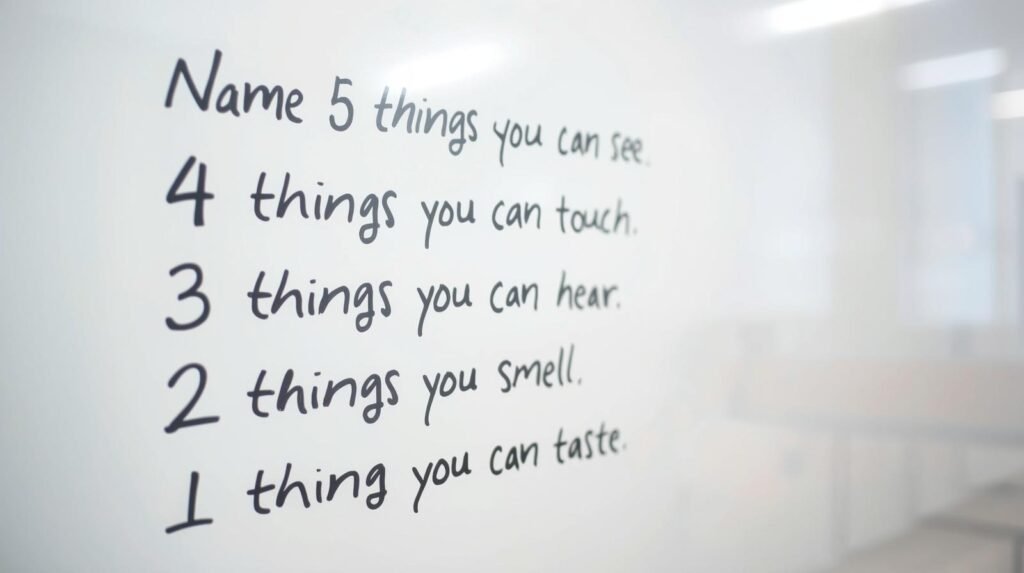
Try the 5-4-3-2-1 method (seriously, it’s one of the most effective quick ways to feel less anxious):
- Name 5 things you can see
- 4 things you can touch
- 3 things you can hear
- 2 things you can smell
- 1 thing you can taste
Your brain cannot simultaneously catastrophize and count. It’s neurologically impossible. This isn’t distraction—it’s intentional nervous system regulation. Keep this one in your back pocket for meetings that make your heart race or Sunday evenings when the “dreads” arrive.
3. Reframe Your Morning Routine
Here’s an uncomfortable truth: how you spend the first hour after waking significantly predicts your mental state for the entire day. I know—you’re already thinking about the emails, the commute, the chaos. But hear me out.
A solid daily routine for better mental health doesn’t require a 5 AM meditation practice or cold plunges (though if that’s your thing, crack on). It requires intentionality. Even small tweaks create ripples.
Morning habits that matter:
- Resist the phone scroll. Give yourself ten minutes of device-free waking. Your cortisol levels will thank you.
- Hydrate before you caffeinate. Your brain is roughly 75% water. Start there.
- Move your body. Even a five-minute stretch or walk around the block signals to your system that it’s safe and capable.
- Set one realistic intention. Not five goals. One thing that would make today feel worthwhile.
4. Actually Eat Breakfast (Or Don’t—But Be Intentional)
The nutrition-mental health connection is no longer fringe science. Your gut produces about 90% of your body’s serotonin. Skipping meals, bingeing on sugar, or surviving on coffee and biscuits sends your blood sugar—and your mood—on a rollercoaster.
You don’t need a restrictive diet. You need consistency and balance. Protein with breakfast stabilizes blood sugar. Regular meal times create predictability your nervous system craves. And honestly? Sometimes a proper meal is the difference between coping and unraveling.
5. Build a Micro-Movement Practice
Exercise as mental health treatment is so well-established it’s almost boring. Except most advice assumes you’ll suddenly start running 5Ks or join a gym. Let’s be realistic.
Natural ways to manage stress and anxiety through movement don’t require lycra or memberships. They require showing up—even when it’s just for ten minutes.
Accessible movement options:
- A walk around your neighborhood (ideally in daylight—the vitamin D boost is real)
- Dancing in your kitchen while making dinner
- Following a 10-minute yoga video on YouTube
- Taking the stairs instead of the lift
- Desk stretches during work calls
The goal isn’t fitness transformation. It’s shifting stagnant energy and giving your overactive mind something else to do.
6. Practice Saying “No” (Revolutionary, I Know)
Burnout doesn’t announce itself with trumpets. It creeps in through accumulated yeses—commitments that drain rather than energize you. Learning to protect your time and energy is fundamental to any self care plan.
Start small. Decline one optional social event this week. Don’t volunteer for that extra project. Skip the family gathering that leaves you depleted. Notice that the world keeps spinning. Notice that relationships worth having withstand boundaries.

7. Create a “Worry Window”
Anxiety loves an open-door policy where it can barge in anytime. Counterintuitively, scheduling a specific time to worry actually reduces overall anxiety.
Set a daily 15-minute “worry window”—say, 4 PM. When anxious thoughts arise throughout the day, acknowledge them: “I see you. We’ll discuss this at 4 PM.” Then redirect. During your scheduled window, write out your worries. Analyze them. Problem-solve if possible. Then close the window until tomorrow.
This technique, rooted in cognitive behavioral therapy, teaches your brain that anxiety has a time and place rather than unlimited access. It’s surprisingly effective.
8. Master the Art of Micro-Breaks
You cannot sprint a marathon, yet we expect our minds to maintain focus for eight-hour stretches. How to look after your mental health at work often comes down to strategic disengagement.
Every 90 minutes, take a genuine break:
- Step outside for 60 seconds
- Close your eyes and breathe deeply for five breaths
- Stretch your neck and shoulders
- Chat with a colleague about something unrelated to work
- Stare out the window (genuinely—let your gaze soften and your mind wander)
These aren’t indulgences. They’re maintenance. Your brain needs recovery cycles to sustain performance and emotional regulation.
9. Curate Your Media Consumption
The news cycle, social media algorithms, and endless content streams are designed for engagement, not your wellbeing. If you’re struggling mentally, your media diet matters enormously.
I’m not suggesting ignorance. I’m suggesting boundaries. Perhaps you check news once daily instead of constantly. Maybe you remove social media from your phone and access it only via desktop. Consider unfollowing accounts that trigger comparison or anxiety, even if they’re “informative.”
Your mental bandwidth is finite. Protect it fiercely.

10. Develop a Bedtime Wind-Down Ritual
How to calm your mind before bed determines your sleep quality, which dramatically impacts mood, stress resilience, and cognitive function. Poor sleep and mental health struggles create a vicious cycle—but that means improving one helps the other.
Evening practices that support better sleep:
- Set a “digital sunset” one hour before bed (yes, really)
- Keep bedroom temperature cool (around 16-18°C)
- Try progressive muscle relaxation: systematically tense and release each muscle group from toes to head
- Read fiction (not work documents or distressing news)
- Keep a notepad beside your bed for late-night thoughts that won’t let you rest
- Consider magnesium supplements (consult your GP first)
Quality sleep isn’t luxury. It’s foundational to every other strategy on this list.
11. Connect With Someone Real
Loneliness is as harmful to health as smoking 15 cigarettes daily. Yet modern life makes genuine connection increasingly rare. When was the last time you had a proper conversation—not a text exchange or a comment thread, but real, vulnerable dialogue?
Today, reach out. Call someone you’ve been meaning to contact. Have coffee with a friend. Attend that community group you’ve bookmarked. Join an online forum for something you’re interested in. The format matters less than the authenticity.
And if you’re thinking “But I don’t want to burden anyone”—stop. Sharing struggles isn’t burdening; it’s being human. It also gives others permission to do the same.
12. Try These Mindfulness Exercises for Everyday Life
Mindfulness has been commercialized to death, I know. Strip away the wellness-industrial-complex packaging, though, and you’re left with something genuinely useful: the practice of present-moment awareness without judgment.
You don’t need an app or a subscription. You need intention.
Practical mindfulness practices:
- Mindful tooth-brushing: Notice the taste, texture, sensation, and sound rather than thinking about your to-do list.
- One-breath reset: Throughout your day, pause and take one completely conscious breath. That’s it.
- Mindful eating: Choose one meal weekly where you eat without screens, slowly, noticing flavors and textures.
- Sensory walk: During your next walk, focus entirely on what you see, hear, and smell. When your mind wanders (it will), gently bring it back.
These aren’t escapes from reality. They’re full participation in it.
13. Implement the “Daily Three” Journaling Practice
Journaling doesn’t require leather-bound notebooks or perfect penmanship. It requires honesty and consistency.
Each evening, write:
- Three things that happened today (anything—could be “I had good coffee”)
- One challenge I faced (and optionally, how I handled it)
- One thing I’m looking forward to (even if it’s just tomorrow’s lunch)
This takes three minutes. Over weeks, patterns emerge. You’ll spot triggers, recognize resilience you didn’t know you had, and create a record of your journey that provides perspective during difficult stretches.
14. Create a “Pleasure Menu”
Depression and burnout erase your memory of what brings joy. You genuinely forget what you like. A “pleasure menu” solves this by documenting activities that reliably lift your mood when you’re feeling okay, so you can reference them when you’re not.
Your list might include:
- Watching that comfort show that always makes you laugh
- Baking something simple
- Organizing a drawer (some of us find this soothing—no judgment)
- Playing music you loved in your twenties
- Messaging that friend who always gets it
- Taking a hot shower with your favorite soap
This is your customized collection of easy self care ideas at home. When motivation vanishes, you don’t need to think—just pick something from the menu.
15. Practice “Dopamine Detox” Days
Our brains are overstimulated to the point of numbness. Constant notifications, endless content, and habitual scrolling have hijacked our natural reward systems. Occasionally resetting this creates space for genuine satisfaction in simple things.
Once weekly, try a modified dopamine detox:
- No social media or internet browsing (emergencies excepted)
- No streaming services or gaming
- Minimal phone usage
Instead: read, walk, cook, create something, have actual conversations, sit with boredom.
The first hour is uncomfortable. By hour three, something shifts. You remember what it’s like to be present in your own life.
16. Establish Clear Work-Life Boundaries
Remote work and always-connected culture have obliterated boundaries between professional and personal life. If you check emails at 10 PM or think about work during dinner, your nervous system never fully disengages.
Boundary practices that work:
- Set specific work hours and stick to them
- Create a physical transition ritual (changing clothes, a short walk) when you finish work
- Turn off work notifications outside work hours
- Have a separate work phone if possible, or use focus modes rigorously
- Physically separate your workspace from living space
You’re not being difficult. You’re being sustainable.

17. Spend Time in Nature (Even Urban Nature Counts)
The Japanese have a term—shinrin-yoku, or forest bathing—for therapeutic time in nature. The research is compelling: even 20 minutes in green space reduces cortisol levels, lowers blood pressure, and improves mood.
Don’t have access to forests? A park works. A tree-lined street works. Sitting in your garden or on your balcony works. Open your window if nothing else. Natural light and fresh air aren’t aesthetic preferences—they’re biological needs.
18. Tackle One Small Task You’ve Been Avoiding
Incomplete tasks create cognitive load—your brain uses energy tracking them, generating low-level anxiety. Today, pick one thing you’ve been putting off and complete it.
Not ten things. One.
Pay that bill. Make that appointment. Send that text. Clean out that drawer. The specific task matters less than the act of finishing something. Completion releases trapped energy and reminds you of your capability.
19. Limit Alcohol and Monitor Substance Use
This isn’t moral judgment—it’s neuroscience. Alcohol is a depressant. It might temporarily ease anxiety, but it disrupts sleep architecture, depletes B vitamins crucial for mood regulation, and creates a rebound anxiety effect.
If you’re using alcohol (or anything else) to cope with difficult emotions, that’s information. Notice it without shame, then consider alternatives that don’t create their own problems.
20. Access Free Mental Health Tools and Resources
Professional support matters, but financial or logistical barriers are real. Fortunately, there are legitimate free mental health tools and resources available right now.
Free UK resources worth exploring:
| Resource | What It Offers | How to Access |
| NHS Every Mind Matters | Personalized mental health action plan | nhs.uk/every-mind-matters |
| Samaritans | 24/7 emotional support helpline | Call 116 123 (free) |
| Shout | Text-based crisis support | Text “SHOUT” to 85258 |
| Mind Infoline | Information and signposting | Call 0300 123 3393 |
| Sanvello App | Mood tracking and CBT tools | App Store/Google Play |
| Headspace (free version) | Basic meditation and mindfulness | headspace.com |
| Student Minds | University student support | studentminds.org.uk |
These aren’t substitutes for professional care when needed, but they’re valuable bridges and supplements.
21. Know When to Seek Professional Support
Here’s the most important item on this list: self-help has limits. If you’re experiencing any of the following, it’s time to contact your GP, a therapist, or emergency services:
Signs you should seek professional mental health support:
- Persistent low mood or anxiety lasting more than two weeks
- Thoughts of self-harm or suicide
- Inability to complete daily tasks (work, personal care, relationships)
- Significant changes in sleep, appetite, or energy lasting more than a few weeks
- Substance use that’s escalating or causing problems
- Intrusive thoughts or compulsive behaviors that interfere with life
- Disconnection from reality or hallucinations
- Extreme mood swings affecting relationships and functioning
When to call a helpline for mental health immediately:
If you’re in crisis, experiencing suicidal thoughts, or feel unsafe:
- Call Samaritans: 116 123 (24/7, free)
- Text Shout: 85258
- Call 999 if in immediate danger
There’s no prize for struggling alone. Reaching out isn’t weakness—it’s navigation. It’s saying “I need a co-pilot for this bit,” which is precisely what you’d do in any other challenging situation.
How to Stay Consistent When Motivation Disappears
You might be wondering: how do I stay consistent with new mental health habits when I feel unmotivated? This is the question that determines whether strategies work or become another source of guilt.
The answer isn’t willpower—it’s systems.
Strategies for consistency:
- Stack habits: Attach new practices to existing routines. “After I brush my teeth, I’ll do my grounding exercise.”
- Lower the bar ridiculously: Can’t meditate for 20 minutes? Try two minutes. Can’t walk 30 minutes? Try five.
- Track without judgment: Mark completed practices on a calendar, but if you miss days, simply restart without self-criticism.
- Focus on identity, not outcomes: “I’m someone who takes care of their mental health” beats “I need to feel better.”
- Build in flexibility: Life happens. Your plan should accommodate reality, not fantasy.
Some days you’ll manage ten of these practices. Other days, you’ll manage one. Both days count.
Building Your Personal Mental Wellbeing Plan
You’ve got 21 strategies now. Don’t try implementing all of them tomorrow—that’s a recipe for overwhelm and abandonment. Instead, how to build a self care plan that actually works:
Week 1: Choose three practices that resonated most. Commit to those only.
Week 2-4: Continue your three, add one more if it feels manageable.
Month 2: Assess what’s working. Drop what isn’t. Add something new if you want.
Ongoing: Revisit this list when life shifts—different seasons and circumstances require different tools.
Think of this as creating a personalized mental health ecosystem rather than following a rigid protocol. Flexibility is sustainability.
The Reality Check
What are the most effective things I can do today to improve my mental health? Honestly—it’s probably not one dramatic gesture. It’s likely three or four small, unsexy practices done consistently enough to become automatic.
How quickly can lifestyle changes like sleep, exercise or diet improve my mental health? Some effects—like post-exercise mood lift—happen within hours. Others—like sleep pattern improvements or dietary changes—might take weeks to months. Be patient but persistent.
Are there simple activities I can do at home if I cannot access therapy right now? Absolutely. Everything on this list, plus online resources, self-help books based on evidence-based therapies (look for CBT or ACT workbooks), and peer support communities can provide genuine benefit while you wait for professional support.
Which self‑care ideas are genuinely helpful for anxiety, low mood or burnout? The ones that address root causes rather than just symptoms. Physical movement, sleep hygiene, social connection, and boundary-setting consistently outperform bubble baths and face masks—though if those bring you joy, brilliant.
Final Thoughts: Progress Over Perfection
Mental health isn’t a destination where you arrive, perfectly balanced, immune to difficulty. It’s an ongoing practice of noticing, adjusting, and showing up for yourself—especially on days when you least feel like it.
These 21 practices aren’t about becoming someone different. They’re about creating conditions where you can be yourself more fully, with slightly less struggle.
Start today. Start small. Start imperfectly. Just start.
And remember: asking for help when these strategies aren’t enough isn’t failure. It’s wisdom.
What will you try first? Choose one practice from this list and commit to it for the next seven days. Then come back and choose another. Small, consistent steps compound into substantial change—not because they’re magic, but because they’re real.
If you’re experiencing a mental health crisis or need immediate support, contact your GP, call Samaritans on 116 123, text SHOUT to 85258, or call 999 if you’re in immediate danger. Help is available, and you deserve support.